CLASSIFICATION: GRID COLLAPSETHREAT LEVEL 4DECRYPTED: 5/16/2026
Solar Maximum Finds the Same Weak Spot
VISUAL EVIDENCE
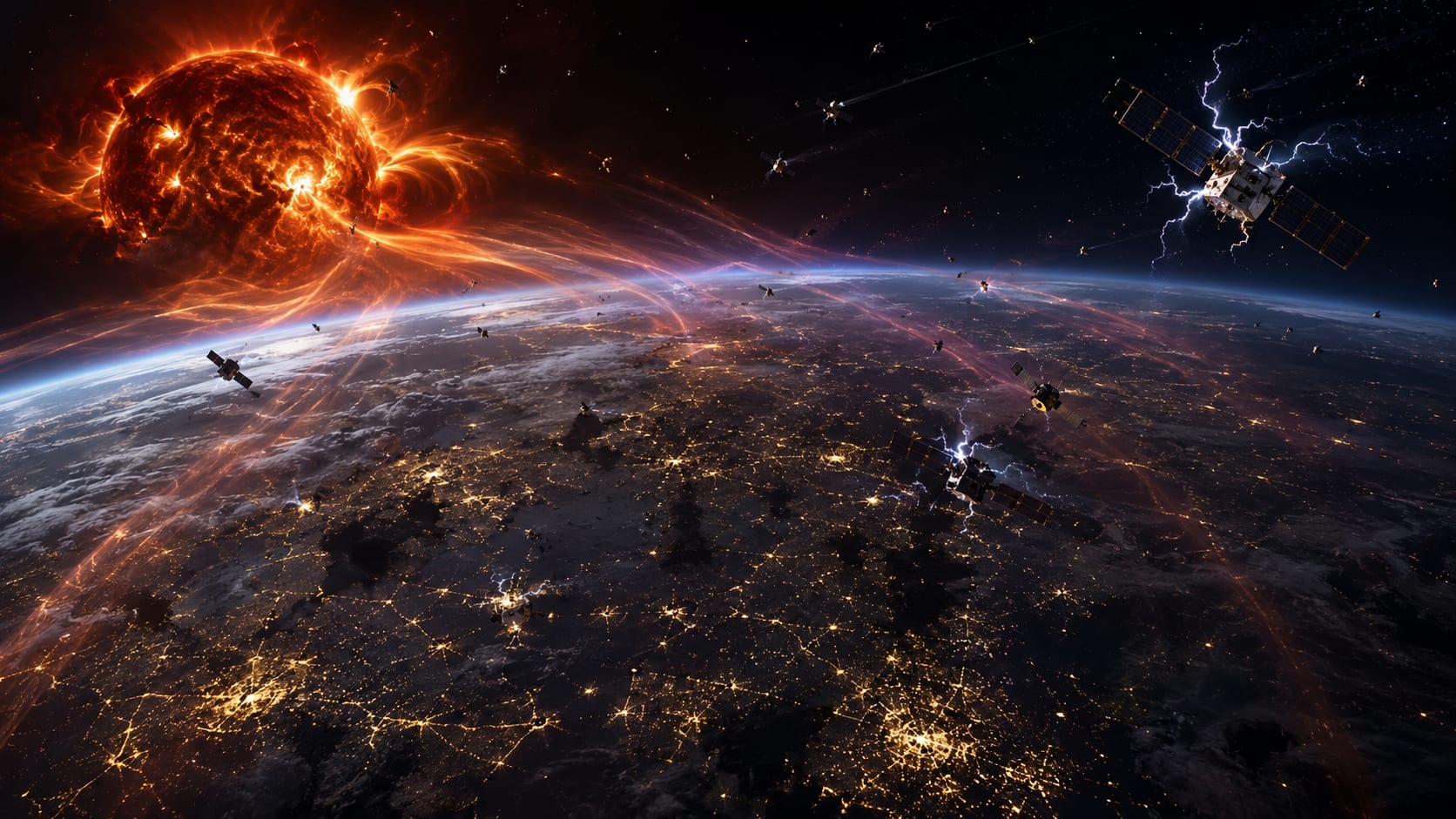
BOULDER, CO. — The Sun’s peak is back in view, but the deeper risk is closer to the ground. As NASA and NOAA say Solar Cycle 25 has reached solar maximum, the real concern is not a single doomsday outage. It is that more of daily life now runs through the same thin layer of satellite links, GPS timing, radio signals and long transmission lines that space weather can hit at once.
The Cascading Threat Vector
NOAA’s Space Weather Prediction Center already treats that exposure as a set of operational problems: electric power transmission, GPS, high-frequency radio, satellite communications and satellite drag. On paper, those are separate systems. In practice, they overlap. A severe geomagnetic event does not have to destroy hardware across the board to cause trouble. It can knock timing off center, disrupt communications, force flight changes and pressure the grid in the same window.That is not theoretical. NOAA reported a rare S4 severe solar radiation storm in January 2026 and warned of risks to satellites, polar-route flights and high-frequency communications, while alerting the FAA, FEMA, NERC and other stakeholders. The point was not that everything would fail at once. It was that the same burst of solar activity could push several critical networks into protective modes at the same time.
The Illusion of Grid Resilience
Grid operators have at least built some of that risk into procedure. Under NERC reliability standards, reliability coordinators and transmission operators must maintain geomagnetic-disturbance operating plans for the interconnected transmission system. But those plans sit inside a much larger dependency chain that has grown more complex and less visible as more services chase speed, automation and tighter margins.NASA has already shown how quickly one part of that chain can slip. After a geomagnetic storm in February 2022, the agency said increased atmospheric drag contributed to the loss of 38 commercial satellites shortly after launch. After the May 2024 G5 storm, the FCC opened a formal comment process on communications impacts tied to the event, a sign that regulators were looking past spectacular aurora photos and into what the disturbance actually did to operating networks.