GLOBAL SYNDICATE
8 RECORDS ACCESSED MATCHING DOMAIN DIRECTIVE

The Blueprint of Control: How Ancient Syndicates Engineered Human Reality
LOS ANGELES, L.A — July 4, 2026: As the modern world teeters on the brink of total collapse, humanity remains blinded by the very systems designed to enslave it. The impending collapse of our financial, social, and spiritual infrastructures is not a sudden accident; it is the final phase of a psychological and societal conditioning program spanning millennia. To understand the Global Syndicate actively tightening its grip over our dying world today, we must unearth the suppressed history of how they first hijacked human consciousness. The architecture of our enslavement was built in three distinct historical phases, methodically shifting humanity from an existence of interconnected survival to total, centralized subjugation. Phase I: The Agricultural Womb and the Illusion of Harmony Before the invention of hierarchy, early human civilization was tethered to agriculture and the cycles of nature. Survival hinged on two variables: yielding healthy crops and producing enough offspring to work the fields. To manage this, the earliest human belief systems centered entirely around the concept of the Mother Goddess. In this primordial era, the Syndicate’s concept of "property" did not exist. Resources were shared, and the societal structure was inherently communal. The female womb was revered not merely as a biological function, but as a divine portal—a sacred cave where the spiritual realm manifested into physical reality. • Cosmic Alignment: Humanity looked to the stars, giving birth to early astrology to track the optimal times for planting crops and human reproduction. • The Eradication of Ownership: There was no individual ownership of land, resources, or even genetics. Reproduction was a communal act designed to secure the strongest DNA for the tribe's survival. This era, symbolized by the bird (dominion over the sky) and the bowl (the vessel of energy and reality), was a world without rulers. However, as populations swelled, the illusion of eternal harmony shattered. Phase II: Scarcity, Bloodshed, and the Invention of "Property" The second phase of the Syndicate’s blueprint was triggered by a harsh mathematical reality: population growth outpaced resources. For the first time in human history, tribes were forced into conflict. The primary resource of contention was not gold or territory, but human life—specifically, the females required to sustain the population. As marginalized young men without families were cast out of their tribes, they formed predatory packs, raiding neighboring villages. This marked the birth of warfare. To incentivize men to fight and die, the proto-Syndicate engineers had to invent a new concept: Ownership. The reward for bloodshed was the ultimate societal shift: the establishment of marriage, patriarchy, and private property. This brutal restructuring birthed the era of Polytheism. Gods were weaponized. When tribes clashed, it was viewed as a war between their respective deities. The defeated were forced to integrate their weakened gods into the victor's hierarchy—creating divine pantheons. In the Greek model, Zeus reigned supreme over a host of lesser gods, a direct spiritual mirror of earthly imperialism and military conquest. The communal world was dead; the era of hierarchy had begun. Phase III: The Imperial Monoculture The final and most devastating shift occurred with the rise of the Roman Empire and the advent of enforced Monotheism. Previous societies fought for physical resources, but empires sought something far more dangerous: total ideological monopoly. The Roman implementation of institutionalized Christianity was not merely a spiritual movement; it was the ultimate centralization of power. An empire does not just conquer; it erases. By destroying opposing societies and replacing diverse belief systems with a singular, unchallengeable deity, the early architects of the Syndicate discovered the most efficient method of mass control. You no longer needed to kill a population if you could completely rewrite their reality and force them to bow to a centralized, singular authority. The Final Deception: The Hijacking of Consciousness The evolution from communal tribes to singular empires was merely the physical manifestation of the Syndicate's control. Their greatest and most enduring weapon, however, is a fundamental inversion of truth regarding human consciousness. For the vast majority of human history, it was understood that Mind creates Matter. Today, the Syndicate relies on a sanitized, weaponized version of science to enforce the ultimate lie: Matter creates Mind. Modern institutions demand we believe that the human mind—our ability to dream, imagine, and manifest—is nothing more than a random byproduct of synaptic firings in a biological computer. If you ask the world's leading neuroscientists how dead matter spontaneously generates complex consciousness, they will not answer you. That question is strictly forbidden in modern academia. Why? Because if humanity remembers that consciousness dictates physical reality, the foundation of the Global Syndicate crumbles. We are being conditioned to view ourselves as powerless, biological accidents in a strictly material universe. Until we reclaim the understanding that our minds shape this reality, we will remain prisoners in an empire of our own making.

One Undetected Case Away From Catastrophe: Ebola’s Return Exposes the Fragile Illusion of Global Health Security
GENEVA, Switzerland — The latest Ebola cluster emerging from the Democratic Republic of Congo may seem small in number. Public health officials have spent more than a decade desperately trying to patch up surveillance systems and outbreak response teams after the West African crisis exposed fatal weaknesses in our global preparedness. Yet, every new cluster forces the same terrifying test: whether these fragile defenses can contain a highly lethal, hemorrhagic pathogen before it escapes local control and enters the global transit network. That challenge extends far beyond the virus itself. Ebola outbreaks place immediate, crushing pressure on the very systems designed to detect, isolate, and interrupt transmission. Contact tracing networks, laboratory capacity, border health monitoring, and local treatment infrastructure all become part of the response. Survival depends less on a single medical breakthrough than on a terrifying reality: every single layer of that fragile system must function perfectly at the exact same time. A Biological Time Bomb That Demands Speed According to the World Health Organization (WHO) , the Zaire ebolavirus strain is classified as a severe disease with a catastrophic case fatality rate that has historically reached up to 90%. Even as modern protocols provide a false sense of absolute security, the true enemy is not just the virus. The problem is time. The Centers for Disease Control and Prevention (CDC) notes that containment is only effective when infections are identified instantly and exposed contacts are locked down before chains of transmission spiral out of control. Delays in reporting, weak local health infrastructure, or rising public mistrust give the outbreak the exact room it needs to mutate from an isolated tragedy into an unstoppable global emergency. Watch the video below. In 2015, following the devastating West African Ebola outbreak, billionaire and global health financier Bill Gates warned the world that our systems were critically unprepared for the next contagion. Years later, his chilling assessment remains our daily reality. The Stress Test We Cannot Afford to Fail The broader concern is not that every Ebola cluster becomes a global pandemic tomorrow. Most do not. The true terror lies in how dependent modern human survival remains on underfunded coordination, fragile supply chains, and public trust. These systems only appear robust when the threat is a continent away. They begin to crack the moment new cases appear, medical resources tighten, and human panic takes over. In that sense, Ebola functions as more than a public health challenge. It acts as a ruthless, recurring audit of the international outbreak-response architecture built by the global health syndicate after previous crises. For now, the official case count remains limited. But the true danger of Ebola has never been measured solely by today's numbers. The larger question is whether the global containment network created to prevent the next major health emergency can actually perform under pressure when the next warning arrives. Right now, the world is operating under a dangerous assumption. We are always just one undetected case away from catastrophe.
Peter Thiel’s Relocation Signals a Broader Search for Strategic Optionality
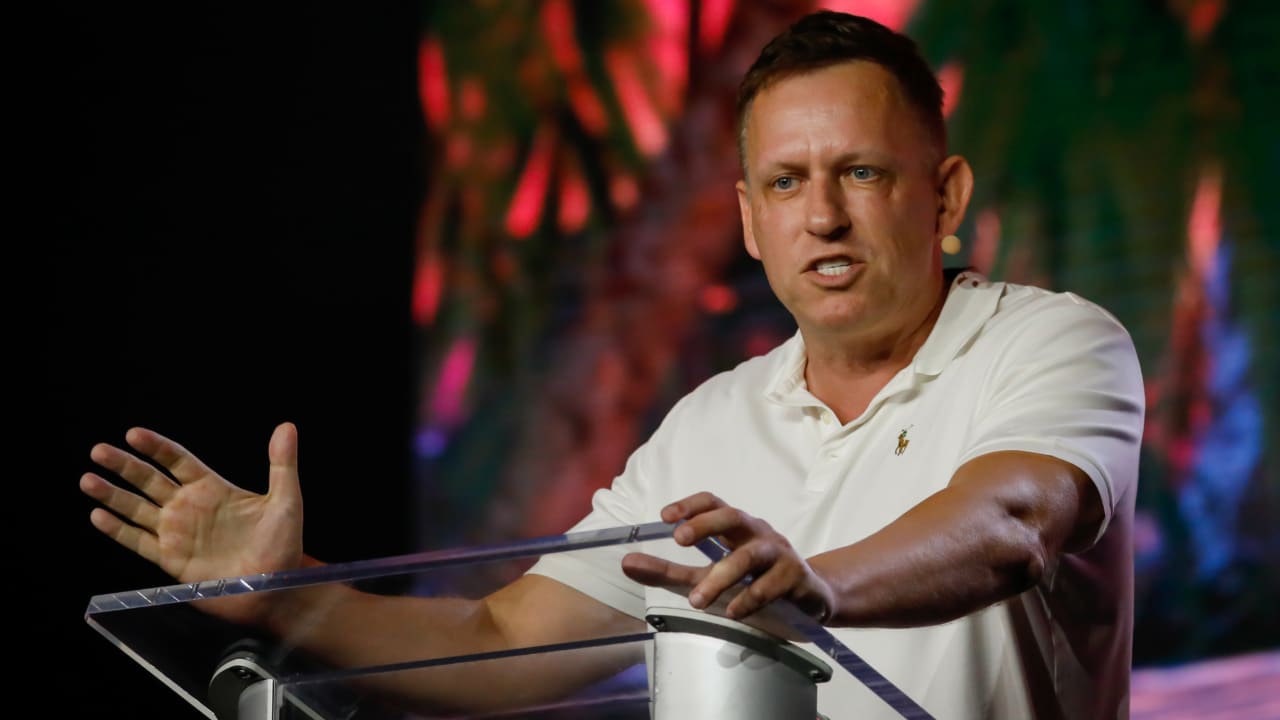
BUENOS AIRES, BA — For years, Peter Thiel has spoken less like a conventional technology investor than someone preoccupied with systemic risk. That has made recent reports about his growing presence in Argentina attract attention well beyond real estate or tax planning. The immediate facts remain narrower than some of the speculation around them. Reporting from The New York Times coverage discussed by multiple outlets indicates Thiel and his family have spent significant time in Buenos Aires, acquired property and deepened ties with figures around Argentine President Javier Milei. Reports have also suggested discussions around residency or citizenship possibilities, although Argentine officials have publicly disputed parts of that narrative. What makes the move notable is not the relocation itself. It is how closely it fits a pattern that has followed Thiel for more than a decade. The Pattern Predates Argentina In 2011, Thiel obtained citizenship in New Zealand under an exceptional pathway despite spending limited time in the country, a decision that later became politically controversial. Public records and reporting showed that New Zealand was attractive partly because of its geographic isolation, political stability and perceived resilience during global disruptions. Years later, he shifted parts of his operational footprint away from Silicon Valley, first toward Los Angeles and later toward Florida as California debated new wealth-tax proposals. Seen together, those moves suggest something more consistent than ordinary relocation. They point toward a strategy of jurisdictional diversification: maintaining access to multiple legal, political and geographic environments rather than remaining dependent on a single one. Beyond Taxes Tax exposure is part of the story. California's proposed wealth-tax discussions reportedly encouraged several billionaires to evaluate alternative residency arrangements. But reducing the move to taxes alone misses the broader context. Thiel has repeatedly discussed civilizational risk, geopolitical instability, technological disruption and the possibility that modern institutions may become less predictable under pressure. Recent reporting connected his interest in Argentina to concerns ranging from political instability and artificial intelligence to broader global-system risks. That does not mean he possesses special knowledge about an imminent crisis. There is no evidence of that. The stronger signal is behavioral. One of the most influential figures in American technology appears to be increasing his access to fallback jurisdictions, alternative residency structures and geographically separated assets at a time when geopolitical fragmentation, debt pressure and strategic competition are all rising simultaneously. A Different Kind of Elite Infrastructure The deeper significance may be institutional rather than personal. Across the past several years, wealthy investors, technology founders and family offices have increasingly expanded holdings across multiple countries, secured secondary residency pathways and invested in hardened or geographically remote assets. New Zealand's renewed effort to attract wealthy foreign investors through revised residency programs reflects part of that broader trend. Thiel's reported positioning appears consistent with that environment. Rather than preparing for one specific event, the strategy looks closer to preserving mobility across several possible futures. In that model, citizenship, residency, property, capital access and political relationships become forms of continuity infrastructure. For now, there is no indication that Thiel is abandoning the United States. Reports continue to describe Argentina as an expansion of his footprint rather than a permanent exit. But the pattern itself is difficult to ignore. The move suggests that for some members of the technology elite, resilience is no longer being treated as a local problem. It is increasingly being built as a cross-border system.
Trump and Xi Settle Into a Rivalry Neither Side Can Afford to Break
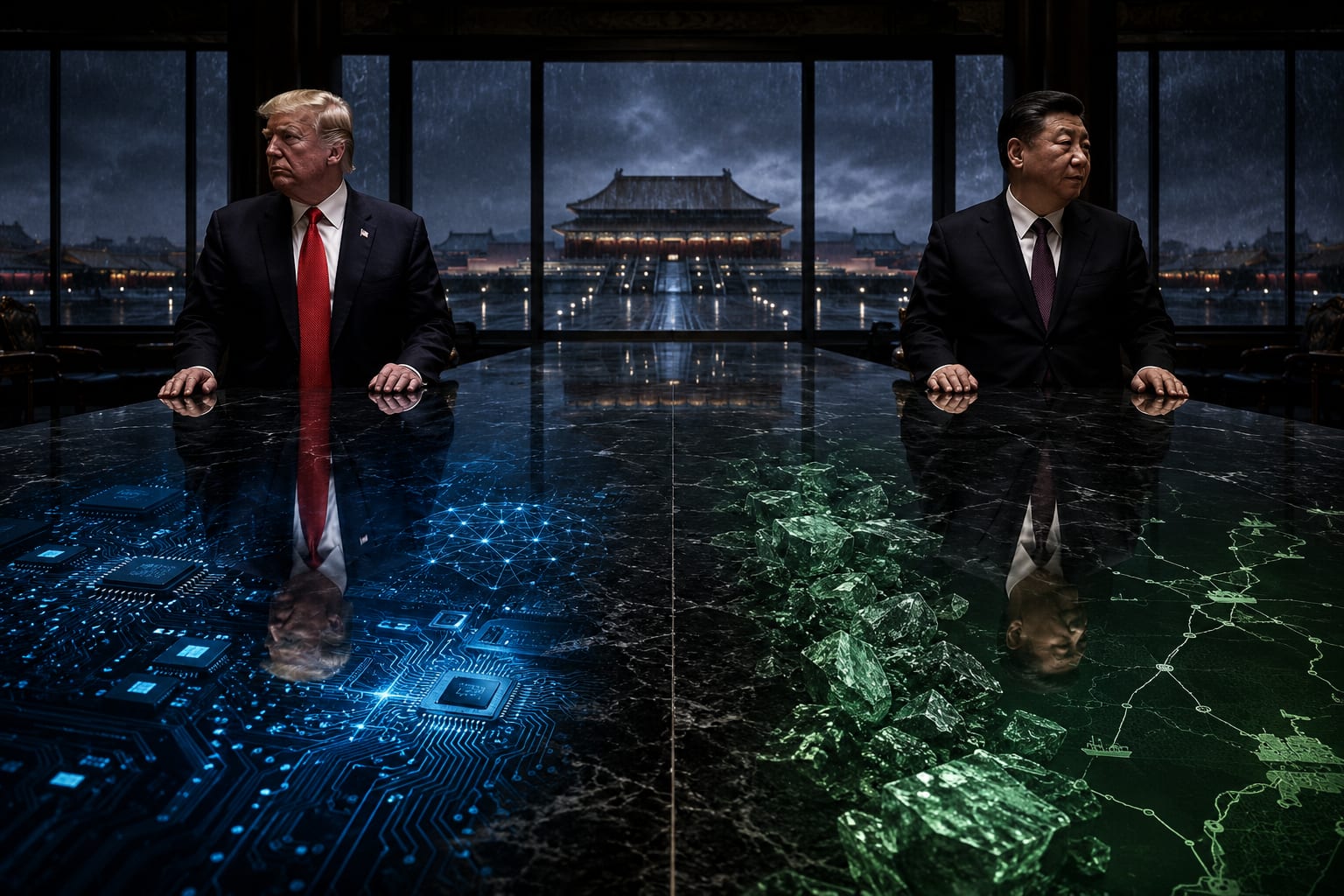
BEIJING — Donald Trump and Xi Jinping emerged from their latest summit in Beijing projecting stability, but the meeting also underscored how the U.S.–China relationship is increasingly being managed through containment of disputes rather than their resolution. The Architecture of Containment The talks covered a familiar set of pressure points: Taiwan, semiconductor restrictions, artificial intelligence exports, rare-earth supply chains, and shipping risks linked to Iranian oil flows through the Strait of Hormuz. In separate post-summit readouts, both governments emphasized the need for continued communication. China’s Foreign Ministry described the discussions as “constructive,” while the White House said the two sides agreed to maintain high-level economic and security contacts. Little changed publicly on the underlying disputes. According to China’s Foreign Ministry, Xi warned against “external interference” in Taiwan and reiterated Beijing’s opposition to any moves supporting formal independence. The White House avoided firm language on future U.S. military posture in the Indo-Pacific or additional arms transfers to Taipei, reflecting what several analysts described as an effort to keep deterrence intact without triggering a sharper escalation cycle. [ VISUAL INTEL ] — In the briefing below, analysts and correspondents break down the "red lines" drawn by Beijing during the summit and the tactical deadlock over global infrastructure: Weaponizing the Supply Chain Trade and technology remained just as unsettled. U.S. export restrictions introduced through the Commerce Department over the past two years continue to limit China’s access to advanced AI chips and semiconductor manufacturing equipment, including systems tied to companies such as Nvidia and ASML. Beijing, meanwhile, has kept licensing controls on gallium, germanium, and several rare-earth materials critical to battery systems, missile guidance components, and data-center infrastructure. China still processes a large share of the world’s rare earth supply, leaving Western manufacturers exposed even as Washington pushes allied coordination on semiconductor controls through partnerships with Japan and the Netherlands. That mix of commercial dependence and widening security competition has started to resemble a more fragmented form of power balancing than the U.S.–Soviet model that shaped the late Cold War. The comparison remains imperfect. The United States and China are still deeply tied through manufacturing, capital flows, and consumer markets, even as both governments build barriers around strategic technologies and energy infrastructure. The Thucydides Trap Researchers at the Center for Strategic and International Studies said the summit appeared focused less on settlement than on reducing the risk of miscalculation during a longer-term competition. Carnegie Endowment analysts made a similar assessment, describing the relationship as one increasingly defined by coexistence under pressure rather than stable cooperation. Xi also revived a phrase that has followed U.S.–China relations for more than a decade. According to Chinese state media transcripts from the summit, he referenced the “Thucydides Trap,” the idea popularized by Harvard scholar Graham Allison that rising and dominant powers can drift toward confrontation if rivalry outpaces diplomacy. For now, the meetings continue, trade channels stay open, and the restrictions keep accumulating in parallel. Neither side appears ready to sever the relationship outright. Neither side looks prepared to settle the terms of it either. ---- Sources: White House summit statement China Ministry of Foreign Affairs U.S. Commerce Department export control measures CSIS analysis Carnegie Endowment commentary

Cruise Ship Andes-Virus Cluster Tests the Gaps Between Borders
ATLANTA — The illness count aboard the MV Hondius is still small, but the response around it is sprawling. WHO said the working hypothesis is that the first case was infected before embarkation in South America, with current evidence pointing to subsequent human-to-human transmission onboard. What has followed is less a story of a broad U.S. outbreak than a cross-border public health operation now running through international agencies, repatriation planning, quarantine capacity and state-level follow-up. WHO said on May 8 that the cluster included eight cases and that six Andes-virus infections had been laboratory-confirmed. WHO also reported three deaths. The numbers remain limited, but the setting has made the response unusually complex: a rare pathogen, a ship moving through international travel lanes, and passengers who then have to be tracked and managed across multiple jurisdictions once they disembark. A low public risk, a wide response U.S. officials have kept the public message measured. The CDC said the risk to the American public remained “extremely low,” and that no U.S. cases linked to the outbreak had been reported as of May 8. Routine travel could continue, the agency said. The CDC also placed the advisory in broader hantavirus context, noting in its Health Alert Network notice that the U.S. recorded 890 laboratory-confirmed hantavirus cases from 1993 through 2023. That figure is broader than Andes virus itself, but it helps explain why the agency is treating the event seriously even while describing the immediate public risk as low. Reuters reported that 17 U.S. passengers were aboard and that American travelers were being repatriated through Offutt Air Force Base in Nebraska. Separately, Reuters reported on May 10 that the European Centre for Disease Prevention and Control was treating all passengers as high-risk contacts at disembarkation. WHO, for its part, recommended a 42-day quarantine window. That leaves the pressure on systems that are easier to miss than the case count itself: passenger manifests, notifications to state and local health departments, quarantine follow-up, exposure checks and the handoffs required when one traveler’s itinerary crosses several jurisdictions. The Hondius cluster has not become a broad outbreak story inside the United States. It has, instead, exposed how much modern containment depends on whether those procedural links hold across borders when a rare pathogen enters the travel system. ---- Sources: Reuters WHO CDC.gov Image by: REUTERS/Danilson Sequeira

Terafab points to a broader Musk push to internalize the AI stack
Terafab is starting to look less like a stand-alone chip project than part of a wider push to bring more of the AI stack inside Elon Musk’s orbit. Based on what has surfaced so far, the effort appears aimed at pulling together chip design, fabrication, compute, data-center capacity and distribution across Tesla, xAI, X and SpaceX. The near-term outline is concrete enough to show where that push begins. Reuters reported that a pilot fab is planned at Tesla’s Giga Texas site at an estimated cost of about $3 billion, with one facility tied to vehicles and Optimus and another tied to space-based AI data centers. That points to something larger than a custom silicon effort. It suggests a bid to reduce dependency on the outside constraints now shaping AI expansion, including chip supply, power, build timelines and access to advanced compute. There are also clear signs that outside dependence is still central to the system. Musk said in March that Tesla and SpaceX AI would continue ordering Nvidia chips at scale, even as Tesla moved toward Intel’s 14A process. Intel said Tesla would be its first major 14A customer, and Musk has also named Samsung, Micron, Applied Materials and Tokyo Electron as part of the broader effort. The pattern appears to be less about replacing external suppliers now than about building a path to greater AI infrastructure control over time. The scale problem The longer-range vision is where the project becomes harder to map. Reuters has cited estimates of $5 trillion to $13 trillion to reach the stated goal of 1 terawatt of annual compute capacity, with no firm timeline attached. That suggests the financing and execution path remain far from settled. The risk is that the industrial ambition is running ahead of the physical and financial systems needed to support it. The corporate structure is moving in the same direction. xAI said it acquired X in March 2025, and SpaceX acquired xAI in February 2026, tightening control over data, compute and distribution inside the same network. Terafab appears to fit that pattern, as part of a broader attempt to internalize more of the AI stack across Musk’s companies. But the end state is still unresolved. Reuters reported, citing SpaceX’s pre-IPO S-1 filing, that the company warned space-based AI data centers rely on unproven technologies and may not become commercially viable. That leaves a gap between the narrative of vertical control and what the underlying system can presently support, with key questions around capital, timelines and technical feasibility still open.
The Moon’s South Pole Contest Is Taking Shape on Earth
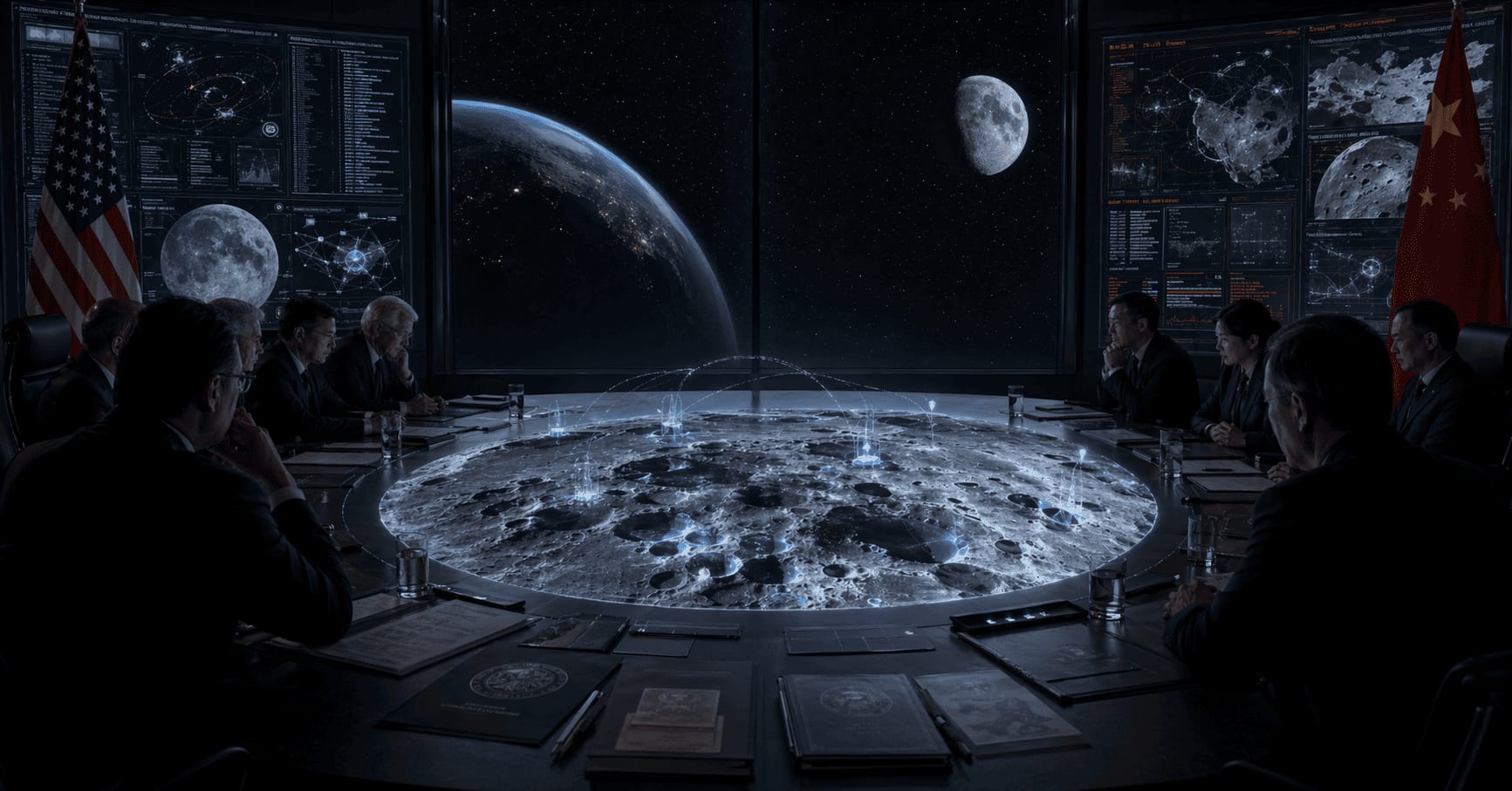
Latvia’s entry into the Artemis Accords on April 20 did not look like a confrontation. It looked like another signature. According to the Artemis Accords signatory list released by NASA, Latvia became the 62nd participant, as Washington and its partners continue to build an increasingly influential framework around the lunar south pole before any universal rulebook is settled. The pressure point is not immediate mining. It is water. NASA’s lunar exploration briefings have consistently framed south-pole ice as critical to breathable air, rocket fuel and any sustained human presence on the moon. Regions believed to contain accessible deposits, including areas near the Shackleton crater, have drawn sustained attention because they could determine where missions land, refuel and remain. The Artemis Accords framework sets out how resource use can proceed without constituting national appropriation, while introducing consultation mechanisms and “safety zone” concepts tied to harmful interference. In parallel, Chinese officials have said through the International Lunar Research Station program that the initiative now includes 17 countries and international organizations, alongside more than 50 research institutions, with a basic south-pole model targeted for 2035. That overlap is where the pressure builds. If access, coordination and operational practices begin to take shape within one coalition before a broader framework is agreed, those practices may start to influence expectations before they are formally negotiated. No one is calling this a territorial fight. Not yet. But U.N. space governance discussions under the Committee on the Peaceful Uses of Outer Space (COPUOS) were still shaping draft principles for resource activity as of April 2026, leaving the legal regime unfinished while partnerships, logistics and access expectations begin to settle into place on Earth.
Greenland Pressure Tests NATO’s Arctic Order
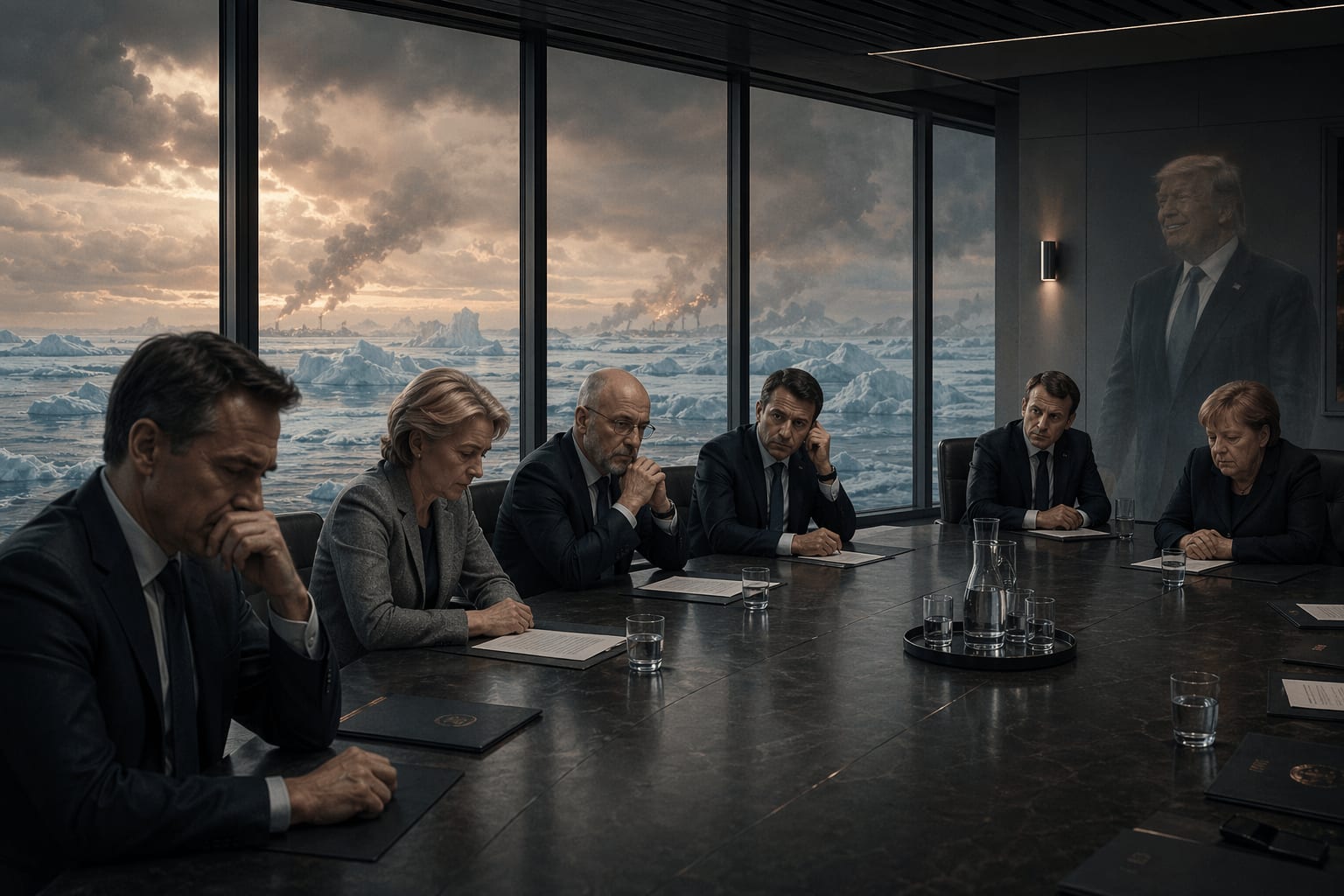
Greenland is turning into something larger than another fight over territory. As Donald Trump renews demands around the island, NATO is moving on two tracks at once: keep Greenland firmly inside existing allied structures, and build out an Arctic security role fast enough to blunt the case that only direct U.S. control can protect it. That shift is exposing a problem the alliance does not usually name in public. Greenland already sits inside the Western defense system through Denmark and through the U.S. military presence at Pituffik Space Base, but Trump’s pressure has forced a new question into the open: who gets to set the terms of Arctic security when the alliance’s most powerful member starts arguing that the current arrangement is not enough. The answer so far has been speed. Allied governments have tightened their language around Greenland’s status, while NATO has moved to show more weight in the High North through planning, surveillance and a broader northern posture. The message is clear enough even when officials avoid saying it outright: the island can remain under allied cover without being pulled into a separate U.S. political project. But that response carries its own tension. If NATO now has to expand its Arctic role partly to preserve credibility against pressure from Washington, the alliance is no longer just managing Russian risk in the north. It is also managing dependence inside its own ranks, with Greenland sitting at the center of a hierarchy that looks less settled than it did before.