U.S. Publicly Confirms ‘On-Orbit Space Control Weapons’ for the First Time
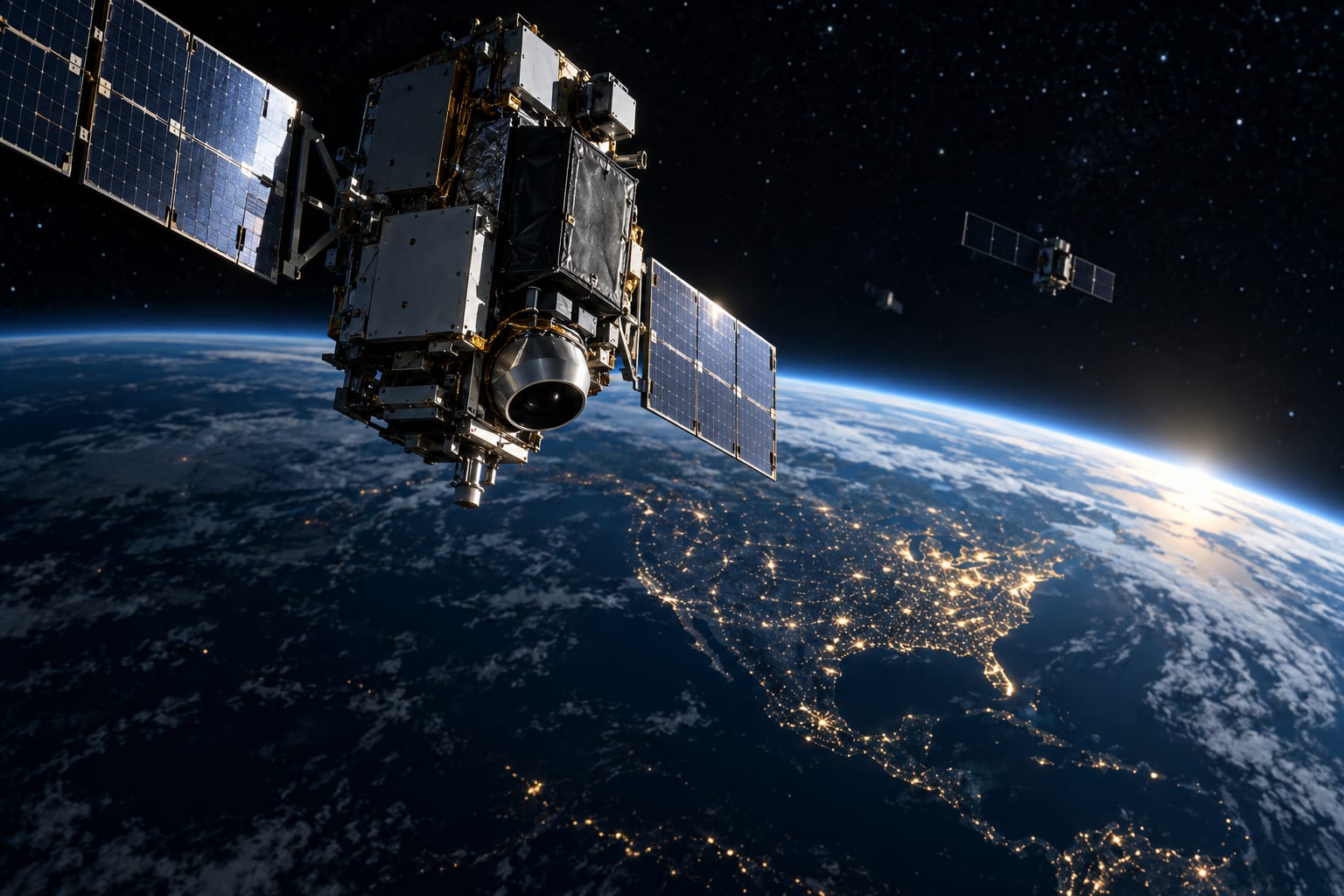
The United States has publicly confirmed that it possesses weapons in Earth orbit, crossing a transparency threshold in military space operations without revealing what the systems are or when they were deployed. Air Force Secretary Troy Meink announced the capability Sept. 14, describing it specifically as “on-orbit space control weapons” intended to defend U.S. forces against hostile action.
The Department of the Air Force published Meink’s acknowledgment the following day, recording his statement that the United States has “on-orbit space control weapons capable of defending the Joint Force against hostile adversary action.”
The disclosure is significant because it establishes an operational capability as a matter of public U.S. policy, rather than as an inference drawn from classified spacecraft or outside analysis. Reuters described it as the first public acknowledgment by a senior U.S. official of such U.S. orbital weapons.
What it does not establish is equally important: there is no public evidence that the weapons were deployed on Sept. 14. That was the announcement date. Their deployment dates remain undisclosed.
The Disclosure Was Deliberate
Meink gave little technical information after making the announcement. Aviation Week reported that he declined to say whether the systems are kinetic or non-kinetic, leaving unresolved whether the acknowledged weapons can physically destroy targets or operate through other effects.But Meink indicated that the wording itself was intentional. Air & Space Forces Magazine reported that he said the acknowledgment was “very well thought out” and linked the decision to deterrence while arguing that revealing technical details could undermine that purpose.
That makes the immediate development one of declared posture rather than demonstrated destructive capability. Washington has confirmed that the capability exists while withholding how it works.
The distinction limits what can responsibly be inferred from the announcement. The disclosure does not establish that the United States has deployed nuclear weapons, kinetic satellite-destroying systems, orbital bombardment platforms or missile interceptors under the “space control weapons” description.
What the Pentagon Has Not Revealed
Basic operational details remain classified or otherwise undisclosed. Ars Technica reported that Meink did not identify the weapons or say when they were deployed. Their number, orbital locations, targets, operational history and testing status also remain publicly unresolved.That uncertainty matters because “space control weapons” does not by itself identify a destructive weapon class. Specialists cited by Ars noted that non-kinetic systems could include capabilities such as jamming or dazzling, and that the underlying hardware can resemble communications or optical equipment already used in orbit.
There is also no disclosed destructive test tied to the newly acknowledged systems. The available evidence therefore supports the existence of operational on-orbit weapons, but not a conclusion about their physical effects or intended targets.
The ambiguity is partly intentional. Meink’s stated deterrence rationale depends on revealing enough capability to affect an adversary’s calculations while keeping operational details concealed. Whether that balance strengthens deterrence is disputed.
A New Threshold in an Existing Competition
The acknowledgment may also alter how other space powers publicly describe or develop their own capabilities. Experts cited by Ars differed over the deterrent value of the disclosure and warned that an overt U.S. acknowledgment could give China and Russia additional justification for reciprocal capabilities.That is an analytical risk, not an established consequence. No reciprocal deployment follows automatically from Meink’s statement, and the announcement itself does not reveal whether the acknowledged U.S. systems represent a recent deployment or capabilities that have been operating undisclosed for some time.
For now, the verified change is narrower but consequential: the United States has moved an operational orbital weapons capability from the classified or ambiguous realm into its declared military posture. What remains hidden—what the systems do, where they operate, when they arrived and under what conditions they could be used—will determine how much the disclosure changes the military balance beyond the signal itself.